


What Is a Custodial Wallet?
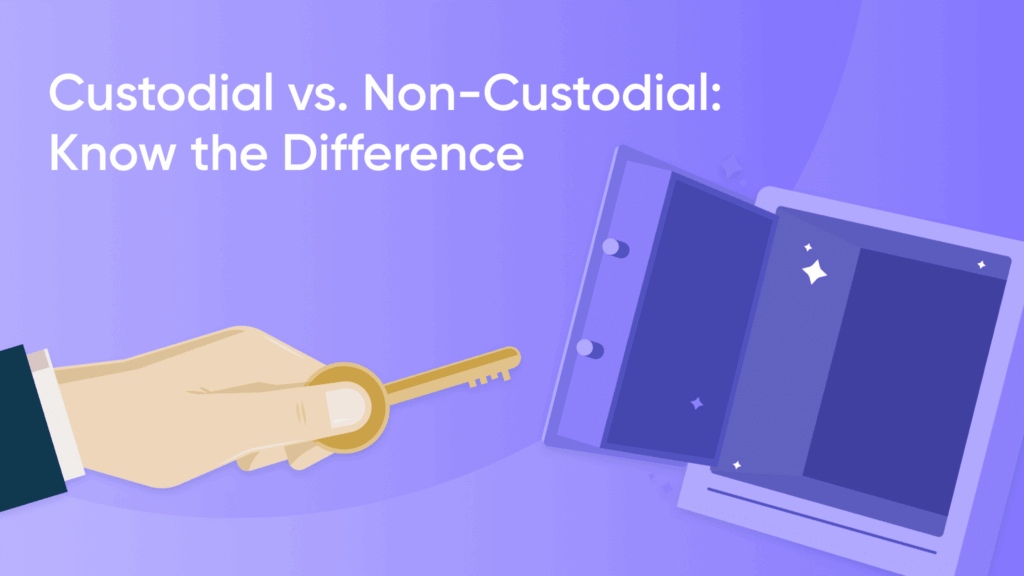
Think online banking for crypto. The platform—an exchange or payment service—holds the private keys on its own servers. You log in with a password, reset it through support, and rely on the company’s security policies. Convenience is king; true control is not yours.
What Is a Non‑Custodial Wallet?
Install MetaMask, Trust Wallet, or plug in a hardware wallet and you’ll see a recovery phrase. Write it down or lose everything, because only you hold the keys. With great freedom comes full responsibility: nobody can freeze your funds, but nobody can help if you misplace that phrase.
Side‑by‑Side Comparison
| Criterion | Custodial Wallet | Non‑Custodial Wallet |
| Who holds the keys? | Third‑party service | You |
| Password recovery | Yes, via support | No — seed phrase only |
| Withdrawal limits | Possible / delayed | None |
| Regulation & KYC | Usually required | Often optional |
| User responsibility | Low | High |
| Single point of hack? | Provider’s servers | Your own device |
Quick Self‑Assessment: Which Wallet Fits You?
- Do I trust myself to store a recovery phrase offline?
- Would a forgotten password ruin my day?
- Am I trading daily or holding for years?
- Is privacy more valuable to me than tech support?
Mostly yes → Non‑custodial may suit you.
Mostly no → Custodial offers a gentler on‑ramp.
Choosing in Real Life
- Newcomer testing the waters: Custodial — simple login, no seed phrases.
- Active trader: Custodial for speed, but move profits to self‑custody overnight.
- Long‑term believer: Non‑custodial or hardware wallet; seed phrase in a safe.
- Business accepting crypto: Hybrid — hot custodial accounts for daily flow, cold non‑custodial storage for reserves.
Start with a secure crypto wallet for buying with a bank card, managing BTC/ETH/USDT, and linking EUR/GBP IBAN for SEPA transfers.
Final Word: Not Your Keys, Not Your Crypto — But Also Not Your Headache
A custodial wallet trades sovereignty for simplicity; a non‑custodial wallet flips the bargain. Decide which risk you prefer today, and remember you can always rebalance tomorrow. In crypto, power — and danger — is literally in your hands.