


If you keep typing what crypto wallet is the best into search, you’re not missing some “secret top pick.” You’re running into a simple truth: the best wallet depends on how you plan to use crypto-quiet saving, daily payments, active trading, or exploring on-chain apps.
This guide is built for beginners who want a clear decision path, not a tech lecture. By the end, you’ll know what to compare, what to avoid, and how to choose a wallet for crypto that feels reliable in real life, not just in marketing.
Why choosing the right crypto wallet matters
Choosing a wallet isn’t like choosing a wallpaper for your phone. It’s more like choosing the lock on your front door. The wallet decides how your money is protected, how you approve transactions, and how painful (or painless) recovery will be if something goes wrong.
A good wallet helps you do three things consistently:
- Access funds easily without confusing steps that invite mistakes
- Stay safe by default, even when you’re distracted or in a hurry
- Recover calmly if you lose a device, reinstall an app, or switch phones
An electronic crypto wallet can be wonderfully convenient, but convenience has to be “engineered,” not assumed. If the wallet pushes you into rushed decisions, hides important details, or makes backups feel optional, it’s quietly training you for a bad day.
Crypto Wallet Basics
A crypto wallet is often described as “where you store crypto,” but that wording creates the wrong picture. Your coins don’t sit inside your phone like photos in a gallery. They exist on the blockchain. Your wallet is the tool that proves you’re allowed to move them.
What a wallet actually controls
At the center of every wallet are cryptographic keys:
- Public address: what you share to receive funds
- Private key: what you must keep secret to approve outgoing transfers
If you remember only one rule: whoever controls the private key controls the funds.
How transactions happen
When you send crypto, your wallet doesn’t “ship coins.” It creates a transaction and signs it with your private key. That signature is the network’s proof that the real owner approved the move.
No signature, no spend. That’s why wallets are fundamentally about authorization.
Custodial vs non-custodial
This is the big fork in the road:
- Non-custodial wallets: you control the keys
- You get direct ownership and more independence
- You must protect backups and recovery words yourself
- Custodial wallets: a service holds the keys for you
- You often get simpler onboarding and account recovery
- You rely on the provider’s security and policies
A crypto virtual wallet can be either custodial or non-custodial. The interface might look similar, but the control layer underneath is radically different.
Main Types of Crypto Wallets
Different wallet types solve different problems. Think of them as storage “styles” for your keys, each with its own comfort level and risk profile.
Hardware wallets
Hardware wallets keep keys in a dedicated device designed to stay isolated from everyday malware.
Best for
- Long-term holding
- Larger balances
- People who want strong protection against online threats
Pros
- Keys stay off your phone/computer in typical use
- Great defense against many remote attacks
Cons
- Costs money and takes setup time
- Can feel less convenient for frequent transactions
Desktop wallets
Desktop wallets run on a computer and often give you more detailed controls than mobile apps.
Pros
- More screen space for reviewing transactions
- Useful for managing multiple addresses or networks
Cons
- If the computer is compromised, your wallet can be exposed
- Less practical for “quick send” moments
Mobile wallets
Mobile wallets are the everyday choice for many users because they’re always within reach.
Pros
- Fast sending and receiving
- Great for QR codes and on-the-go payments
- Often supports DApp connections
Cons
- Phone loss becomes scary without proper backups
- Fake apps and phishing are common traps
Web wallets
Web wallets live in a browser (often as extensions) or are accessed through a web interface.
Pros
- Easy to start
- Convenient across devices
Cons
- Browser risks: malicious extensions, fake sites, and lookalike pages
- Higher phishing exposure if you’re not careful
Paper wallets
Paper wallets store keys or recovery phrases offline on paper (or another physical medium).
Pros
- Fully offline, no direct online attack surface
Cons
- Fire, water, loss, fading ink, accidental exposure
- Easy to make irreversible mistakes during creation or storage
Paper wallets can be “secure” in theory, but beginners often find them unforgiving in practice.
Evaluation Criteria for Best Wallet
Instead of chasing a single winner, compare wallets using criteria that match your real needs. The “best” wallet is usually the one that performs well across the specific checks that matter to you.
Security
Security is not a badge; it’s behavior.
Look for:
- Strong device locks (PIN, biometrics, password)
- Clear backup and recovery flow
- Protection features that don’t rely on you remembering to “turn them on”
- Warnings for risky actions when available
User Experience
A wallet can be technically strong and still be a beginner trap if it’s confusing.
Good UX usually means:
- Clear send/receive steps
- Obvious network selection
- Human-readable confirmations before signing
- A clean history view that helps you verify what happened
Compatibility
Compatibility saves you from migrations later.
Check:
- Which coins and tokens are supported
- Which networks are supported
- Whether the wallet connects to the apps you might try next (DeFi, NFTs, swaps)
Privacy
Privacy is about reducing unnecessary exposure.
Consider:
- Whether you must provide personal data
- Whether the wallet uses tracking by default
- Whether you can manage addresses without oversharing your activity
Cost
Costs arrive in more than one shape:
- Network transaction fees (paid to the blockchain)
- Service fees for swaps or conversions
- Hardware device cost (if you choose cold storage)
- Premium features or subscriptions in some apps
A wallet that looks “free” can still be expensive if it nudges you into costly routes.
Support
When things go wrong, support quality becomes part of the product.
Look for:
- Clear help articles written for non-experts
- Scam education and warnings
- Responsive channels for non-sensitive issues (never share seed phrases with anyone)
Choosing the Best Wallet by Use Case
Now we turn the abstract question into practical choices. Your use case is the strongest predictor of what’s “best.”
Long-term HODL
If you’re storing value for months or years, prioritize minimizing exposure over maximizing speed.
Smart long-term patterns include:
- Hardware wallet storage for larger holdings
- Redundant, well-protected backups
- Multisig setups for higher-value security (requires more than one approval to spend)
Active trading
If you move funds often, friction matters. You want speed, clarity, and fewer chances to misclick.
Good habits for active users:
- Keep “working funds” in a hot wallet
- Keep long-term savings in a more protected setup
- Use test transfers when using new networks or addresses
DeFi/NFTs
For DeFi and NFTs, wallet choice is about safe interaction with smart contracts.
Prioritize:
- Clear transaction previews
- Easy network switching
- Permission management (token approvals)
- A UI that helps you understand what you’re signing
In DeFi, the biggest risk is often approving the wrong thing, not losing a password.
Beginners
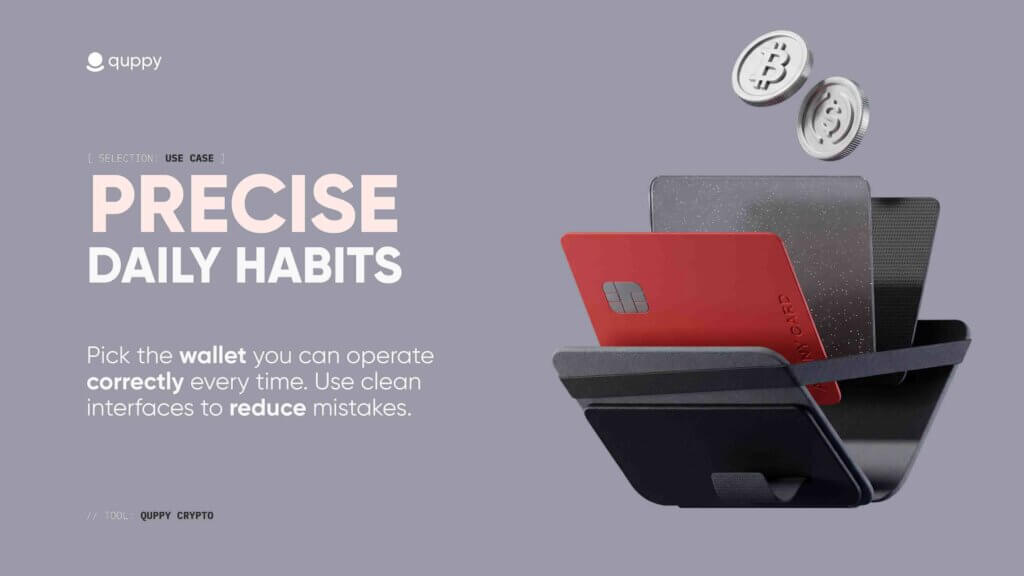
For beginners, “best” usually means: you can use it correctly every time.
Look for:
- Guided backup setup that feels simple
- Clear language, not jargon-heavy menus
- Safe defaults and visible warnings
- A restore process you can understand without panic
Maximum privacy
If privacy is your top priority, you’ll likely lean toward non-custodial setups and careful browsing habits.
Common privacy-focused practices:
- Using non-custodial wallets where you control keys
- Avoiding unnecessary identity linking across services
- Using Tor/VPN where appropriate to your threat model
Privacy is a discipline. Tools help, but habits decide.
Risks and Safety Measures
Most wallet losses come from predictable mistakes and well-worn scams. The blockchain rarely “breaks.” People get tricked, rushed, or unprepared.
Common threats
- Phishing: fake sites and fake “support” chats
- Keyloggers/malware: software that steals data or swaps copied addresses
- Lost recovery phrase: device resets with no backup plan
- Social engineering: urgency tricks that push you to act fast and think later
Even a polished crypto virtual wallet becomes dangerous if you type your seed phrase into the wrong screen or install a counterfeit app.
Safety measures that actually work
- Install wallets only from official sources
- Never share your seed phrase, ever
- Use strong device security (passcode + biometrics)
- Keep your system updated and avoid sketchy extensions
- Send a small test amount before moving large funds
- Confirm addresses and networks before tapping “confirm”
Recovery essentials
Most non-custodial wallets hand you a secret recovery phrase, a string of words that can resurrect your keys if they ever vanish. That phrase is not a “backup option.” It’s the master key.
Treat it like:
- Something that must be stored offline
- Something that must be protected from people and damage
- Something you should never photograph or upload
Quppy Crypto
If you’re still weighing what crypto wallet is the best, Quppy Crypto is designed as a practical answer for users who want a wallet that feels clear, modern, and safety-minded without turning every action into a technical obstacle course.
Quppy is a multi-currency wallet and financial app built for everyday crypto routines. It aims to combine usability with a security-aware approach, so beginners can learn confidently while active users still get a smooth experience.
What makes Quppy a strong contender for “best” in real-world terms:
- A clean, readable interface that helps reduce wrong-network and wrong-address mistakes
- A security approach that encourages safer routines instead of shortcuts
- Multi-asset support so you can manage more than one currency in a single place
- Cross-platform usability that fits modern life (travel, device changes, daily use)
- A balanced profile: comfortable enough for newcomers, capable enough as your activity grows
If you want a digital wallet for crypto that aims for a sensible balance of convenience and protection, Quppy is worth trying.
Register in the app and try Quppy as your main wallet for crypto.
Conclusion
So, what crypto wallet is the best? The best wallet is the one that matches your use case, keeps you safe by default, and doesn’t tempt you into rushed mistakes.
A simple decision shortcut:
- Long-term holding → prioritize cold storage and strong backups
- Frequent use → prioritize clarity and speed, limit exposure
- DeFi/NFTs → prioritize transparency and permission control
- Beginners → prioritize usability and a calm recovery process
Choose the wallet you can operate correctly when you’re tired, distracted, or in a hurry, because that’s when “best” truly reveals itself.