


Where bitcoin stored: The Surprising Truth About “Holding” BTC
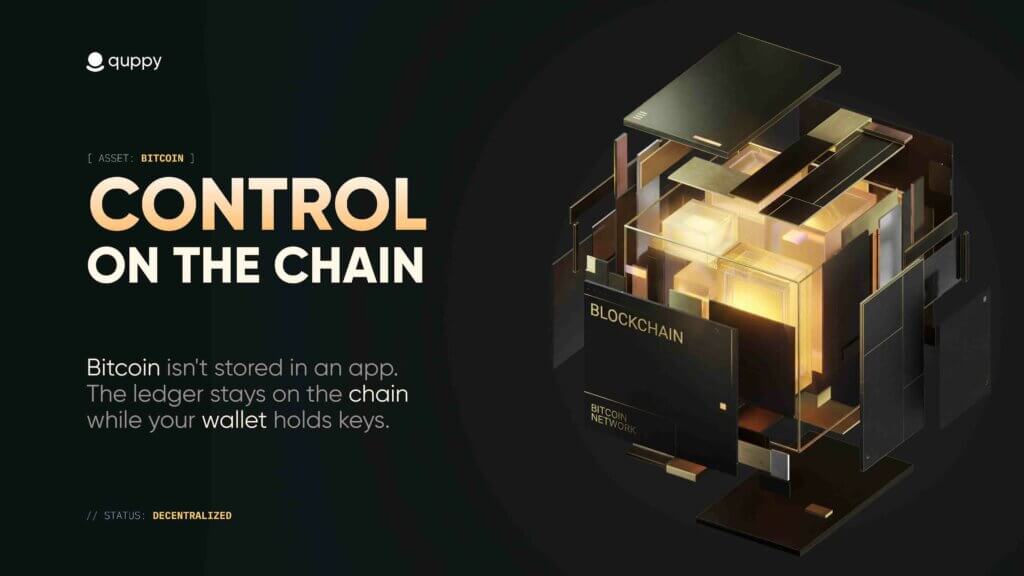
When beginners ask where bitcoin stored, they usually imagine a neat answer like: “It’s inside my app,” or “It’s on a server,” or “It’s in my account.” Bitcoin refuses to be that tidy. There is no digital drawer with your name on it, and there’s no central vault that “keeps” your BTC.
What you really possess is the power to authorize spending, and that power is tied to cryptographic keys. This is why choosing a wallet for crypto is less about finding a pretty interface and more about deciding how you’ll guard access to your Bitcoin.
Bitcoin Isn’t “Stored” Like Files
A photo is stored on a phone. A document sits in a folder. A bank balance lives inside a bank’s database. Bitcoin doesn’t behave like any of these.
Bitcoin exists as a shared record that many independent computers maintain together. Instead of “your coin sitting somewhere,” you have:
- A public history of transactions recorded on the network
- A set of rules that decide which transactions count as valid
- Proof (your keys) that lets you move specific value recorded in that history
So the most accurate way to reframe the question is:
- Where is the record of ownership?
- Where is the secret that proves I’m allowed to spend?
Those two “wheres” are different—and mixing them up is the root of most confusion.
Key Concepts You Must Understand
You don’t need to memorize jargon, but you do need a few mental anchors. Once these click, Bitcoin storage stops feeling mysterious.
Blockchain
The blockchain is Bitcoin’s public ledger: a timeline of transactions that the network agrees on.
A beginner-friendly way to picture it:
- Imagine a public notebook that anyone can read
- New pages are added in order
- Once enough pages stack up on top of a transaction, changing the past becomes extremely difficult
Your Bitcoin isn’t a file inside the notebook. Instead, the notebook contains the history that defines who can spend what.
Private key
A private key is the secret that gives you spending authority.
Important differences from a normal password:
- Passwords can often be reset
- Private keys cannot be “reissued” by support
- If someone else obtains your private key, they can spend your BTC
If you lose your private key and you don’t have a backup method, the network won’t “feel sorry for you.” Bitcoin doesn’t do exceptions.
Public address
A public address is what you share to receive BTC.
It’s safe to share an address, but it must be correct. Bitcoin transactions are final in a practical sense—so one wrong character can send funds to an address you’ll never control.
A simple habit: copy and paste carefully, and verify the first and last characters before sending.
UTXO
Bitcoin doesn’t track “account balances” like a bank. Instead, it uses UTXOs (Unspent Transaction Outputs).
Think of UTXOs like sealed envelopes of value:
- Transactions create envelopes assigned to addresses
- If an envelope hasn’t been spent, it’s a UTXO
- Your “balance” is the total value of envelopes your keys can open
That’s why your wallet can calculate a balance without “holding coins.” It’s reading the public ledger and summing what your keys can unlock.
Where Bitcoin Data Actually Resides
Now we can answer where bitcoin stored precisely, without metaphors that mislead.
On the blockchain
The facts live on the blockchain.
- Transaction history is recorded publicly
- Many nodes keep and validate that history
- There isn’t one master server you can point to
This is why Bitcoin is hard to shut down: it’s not located in one place.
In your wallet
Your wallet stores (or controls access to) keys, not coins.
A wallet typically does four practical jobs:
- Generates addresses for receiving BTC
- Watches the blockchain for relevant UTXOs
- Builds transactions when you want to send
- Signs those transactions with your private key
That’s why a crypto virtual wallet can display your BTC even though nothing is “inside” the app. The record is on-chain; the authorization is with your keys.
Types of Bitcoin Storage
When people talk about storing Bitcoin, they usually mean: “How exposed are my keys?”
Hot wallets
Hot wallets operate on devices that connect to the internet: phones, computers, and browsers.
Why people use hot wallets:
- Fast transfers
- Easy everyday access
- Convenient QR scanning and quick confirmations
But hot wallets live in a messy environment:
- Devices can be infected
- Users can be tricked into visiting fake pages
- Clipboard malware can swap addresses silently
- Fake wallet apps can steal recovery phrases
If you use an electronic crypto wallet for daily spending, treat it like the money in your pocket: useful, but not where you keep everything you own.
Cold wallets
Cold storage means your keys are kept offline or nearly offline.
Common forms:
- Hardware wallets (purpose-built devices)
- Offline backups and carefully isolated setups
Cold storage is popular because it reduces online attack surface. But it shifts risk toward physical and human factors:
- Losing the recovery phrase
- Storing backups where someone can find them
- Damage from fire, water, or careless handling
- Overengineering a system you can’t restore later
Cold storage is powerful when it’s simple, testable, and well-backed up.
How Wallets Interact with the Blockchain
This is the part that clears up the final misunderstanding: wallets don’t “move coins.” They create signed instructions the network accepts.
Receiving BTC
Receiving is mostly passive:
- Your wallet generates a public address
- Someone sends BTC to that address
- The network confirms the transaction
- A new UTXO becomes associated with your address
- Your wallet detects it and updates the displayed balance
Nothing “entered” your phone. The blockchain updated, and your wallet noticed.
Sending BTC
Sending is active and requires authorization:
- Your wallet selects UTXOs you can spend
- It creates a new transaction (recipient, amount, fee)
- It signs the transaction with your private key
- Nodes verify the signature and rules
- Once confirmed, old UTXOs are spent and new ones are created
So spending Bitcoin is basically “proving you’re allowed” in a way the network can verify.
Security Implications: Where Risks Lie
The blockchain itself is designed to be stubborn and resistant. The softer target is usually the human and their device.
Hot wallet risks
Hot wallets face some of the most common risks:
- Phishing: fake sites and fake “wallet restore” pages
- Fake apps: clones that look real but steal seed phrases
- Device compromise: malware that watches screens or alters clipboard content
- Social engineering: “support” accounts asking for your recovery phrase
The best defense is boring but effective:
- install only from official sources
- never share your seed phrase
- double-check addresses and networks
- keep only smaller amounts in daily-use wallets
Exchange custody risks
When Bitcoin is on an exchange, the exchange holds the keys.
This can feel comfortable:
- easy trading
- simple login recovery
- convenient buying with fiat
But it introduces platform risk:
- withdrawals can be delayed
- policies can change
- accounts can be restricted
- you’re dependent on their security and decisions
It’s still a valid choice for some use cases, but it’s not the same as holding your own keys.
Cold storage risks
Cold storage reduces online threats but increases operational risks:
- losing the seed phrase
- storing it somewhere accessible to others
- misreading or miswriting the words
- failing to test recovery before relying on it
A safe cold setup is one you can restore calmly, not one that looks impressive on paper.
Key Recovery
Most non-custodial wallets rely on a seed phrase, often 12 or 24 words.
What the seed phrase really does:
- It can recreate the wallet’s private keys
- Those keys can prove ownership and authorize spending
- Your wallet can scan the blockchain again and “find” your UTXOs
So recovery doesn’t “download your Bitcoin.” It rebuilds your access.
Practical seed phrase rules
- Write it down offline (not a screenshot, not cloud storage)
- Store it somewhere private and protected from damage
- Consider redundancy only if you can do it safely (two secure locations, not two weak ones)
- Never share it with anyone, especially not “support”
For beginners, this is the single most important safety line: whoever has the seed phrase has the wallet.
The Role of Nodes and Miners
Bitcoin works because independent participants enforce the same rules.
Full nodes
Full nodes validate the system:
- they verify transactions
- they reject invalid blocks
- they ensure the ledger follows Bitcoin’s consensus rules
Nodes make Bitcoin less dependent on trust. You don’t need to believe a company, you rely on verification.
Miners
Miners secure the timeline through Proof-of-Work:
- they bundle transactions into blocks
- they compete to add the next block
- their work makes rewriting history expensive
This is part of why Bitcoin “storage” is not about a single location. The ledger is maintained and protected by a network, not a central operator.
Regulatory and Custodial Considerations
Regulation matters mostly when you use services that hold keys for you.
Custodial services
Custodial platforms often include:
- identity checks (KYC)
- regional restrictions
- rules for deposits and withdrawals
They may offer easier fiat options and account recovery, but you exchange independence for convenience.
Non-custodial wallets
Non-custodial wallets typically:
- give you direct key control
- reduce dependency on platform rules
- require you to take backups seriously
If you want to be fully in control, you must also be fully prepared.
Quppy Crypto
Once you understand where bitcoin stored, the choice becomes more practical: Bitcoin’s record is on the blockchain, and the real question is how you manage access, safely and comfortably.
Quppy Crypto is designed to fit into that reality as a multi-currency wallet and financial app that aims to keep core actions clear: receiving, sending, tracking balances, and managing assets without needless friction.
Why Quppy can make sense in a beginner-friendly Bitcoin routine:
- A clean flow that helps reduce common transfer mistakes
- A security-minded approach that encourages safer habits, not shortcuts
- Multi-asset support so you can grow beyond BTC without app overload
- Cross-platform usability that fits real life (device changes, travel, daily use)
- A balanced experience: convenient enough for everyday activity, structured enough to keep you careful
If you want a digital wallet for crypto that feels approachable while you build confident habits, Quppy is a practical place to start.
Download Quppy and start using it today.
Conclusion
So, where bitcoin stored?
- The blockchain stores the public record of transactions and ownership history
- Your wallet stores the keys (or controls access to keys) that let you spend
- Your BTC “balance” is the sum of UTXOs your keys can unlock
- The biggest risk is rarely the blockchain, it’s losing keys, leaking a seed phrase, or trusting the wrong software
A smart beginner approach is to keep small, everyday amounts in a hot wallet and protect larger holdings with stronger isolation and careful backups. And no matter what tool you choose, treat your recovery phrase like the master key, because in Bitcoin, it truly is.